Mood
Playful, glamorous, mysterious, romantic, outrageous, commanding.

Fantasies & kinks · Roleplay
Sexual roleplay is the pleasure of stepping into a character, situation, or altered version of yourself. It can last one sentence or become a whole evening. Good acting is optional; a shared spark is the point.

The short answer
Two or more adults temporarily play with a character, relationship, setting, or power dynamic to create a different erotic mood.
Sometimes the role is obvious: strangers at a bar, a celebrity and an admirer, two fictional characters, or people meeting again under new names. Sometimes it is barely a role at all—one person becomes more confident, more mysterious, more commanding, or more receptive than usual.
The shift matters more than the costume. A changed name, one opening line, or a simple “pretend we have never met” can be enough to move a familiar relationship into unfamiliar territory.
Playful, glamorous, mysterious, romantic, outrageous, commanding.
A first meeting, a hotel bar, another era, an invented world, your own bedroom.
Basically you, a bolder alter ego, or a fully fictional role.
Why it can feel electric
Roleplay can create novelty without requiring a new partner, a new relationship, or even a new location.
A role can make it easier to turn up confidence, flirtation, drama, softness, or authority that feels harder to claim in everyday life.
Partners already know each other, but the script interrupts the usual cues. A new entrance or name can make attention feel newly charged.
An idea that lives in the mind becomes a voice, outfit, room, or exchange. It can stay light and symbolic rather than recreating every detail.
“My character wants…” sometimes feels less exposing than “I want…”. The role creates enough distance to test language and energy.
Research on sexual fantasy suggests an important distinction: imagining a theme and wanting to enact it are not always the same thing. That leaves room for roleplay to be a creative experiment, a recurring favorite, or simply an interesting idea that never leaves conversation. Read the research review.
How far into character?
You do not need matching costumes, an accent, or a five-page script. Start at the level that sounds exciting rather than exhausting.
Use one premise and one opening line: “We have never met.” “You caught me staring.” “Tonight, call me…” Then continue naturally.
Choose characters, a place, and one turning point. Stay in character for ten minutes or until the scene reaches its natural ending.
Add wardrobe, messages sent earlier in the day, a public meeting point, props, music, or a return to the scene after a break.
The scenario map
A useful scenario tells you what feels exciting about it. The exact costume comes later.
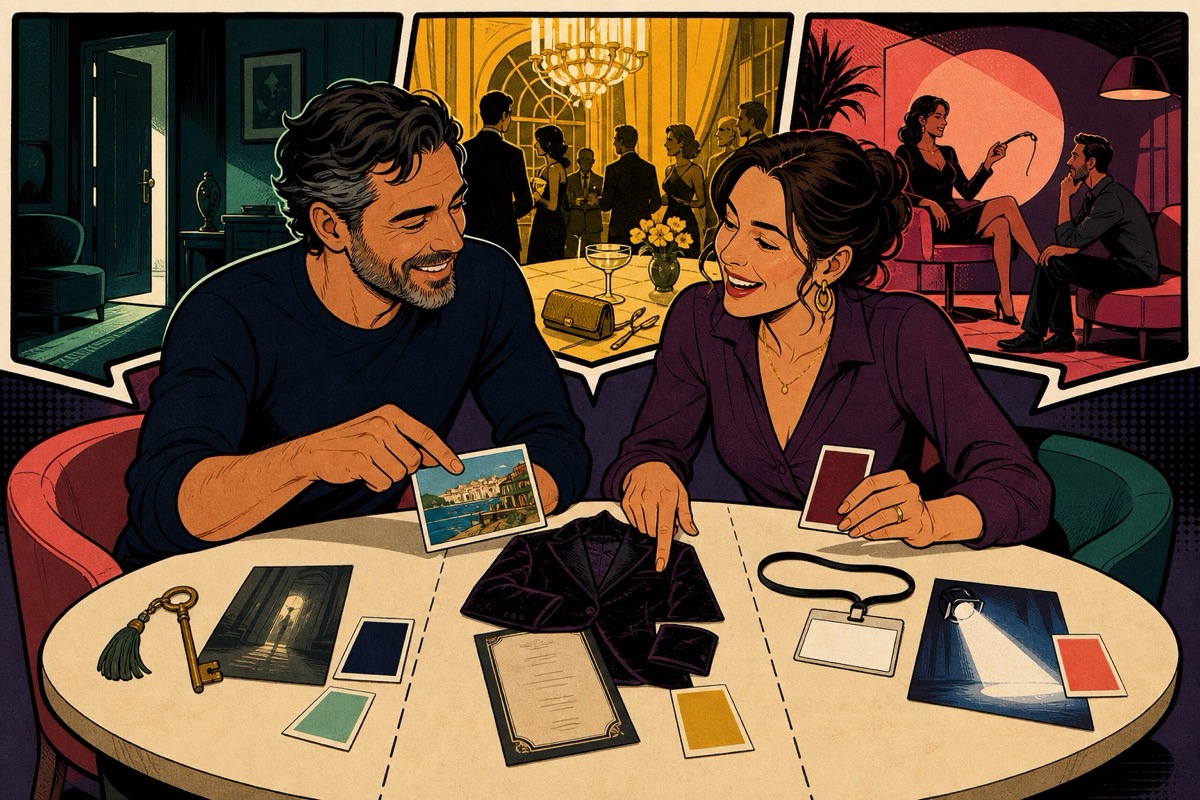
Meet somewhere as if you do not know each other. One person makes the first move; the other decides how quickly to reveal interest.
One person arrives as the glamorous, famous, daring, or magnetic version of themselves. The other plays the person who cannot look away.
Choose who directs the scene and what that direction sounds like. A commanding role can be elegant, playful, strict, or theatrical.
Borrow the atmosphere of a spy story, fantasy kingdom, space station, historical drama, or invented club—without needing to imitate a specific character.
Before the opening line
A little clarity protects the spontaneity. Decide the edges, then leave room to surprise each other inside them.
Name the energy underneath the costume: being pursued, being watched, taking charge, becoming anonymous, breaking routine, or feeling admired.
Separate appealing elements from anything that would spoil the scene. Include words, roles, props, themes, and kinds of touch.
Choose a plain-language pause, a safeword, or simply using each other’s real names. Breaking character should be easy, not dramatic.
Decide whether you want a scripted ending, a natural fade-out, or a quick debrief. Some people want affection; others want a laugh and a snack.
Quick questions
It can be. “Kink” is a broad umbrella, and roleplay is one way people explore fantasy, novelty, power, character, or mood. It can also be a light bedroom game without becoming a major identity or recurring interest.
Start smaller. Use one sentence, dim the lights, text in character before meeting, or choose an alter ego close to your real personality. Feeling slightly ridiculous at first is common—and sometimes the shared laugh is what makes the scene relax.
No. Costume can help signal the shift, but voice, posture, a changed name, music, or a new place can do the same work.
Keep going, restart, or end the scene. Roleplay is collaborative play, not a performance review.
Absolutely. Talking about a scenario, writing it down, or using only one emotional element can be the complete experience.